Most deer hunters lose their season not to bad luck or bad weather, but to ideas they never checked. Some hunting myths that cost hunters deer every season are administrative: a hunter assumes a license, a permit, or a course requirement works one way when the state agency says otherwise. Others are tactical: beliefs about scent, movement, and stand placement that modern hunting has outgrown. The fix in both cases is the same, and it is unglamorous. Read the issuing agency's current rules, and test assumptions against what actually happens in the field.
This piece works through the common ones in plain terms, separating what regulations genuinely require from what tradition merely insists on. Where a rule varies by state, the piece says so, and the only cure is the current digest from the agency that manages the land you hunt.
Is a license just a license?
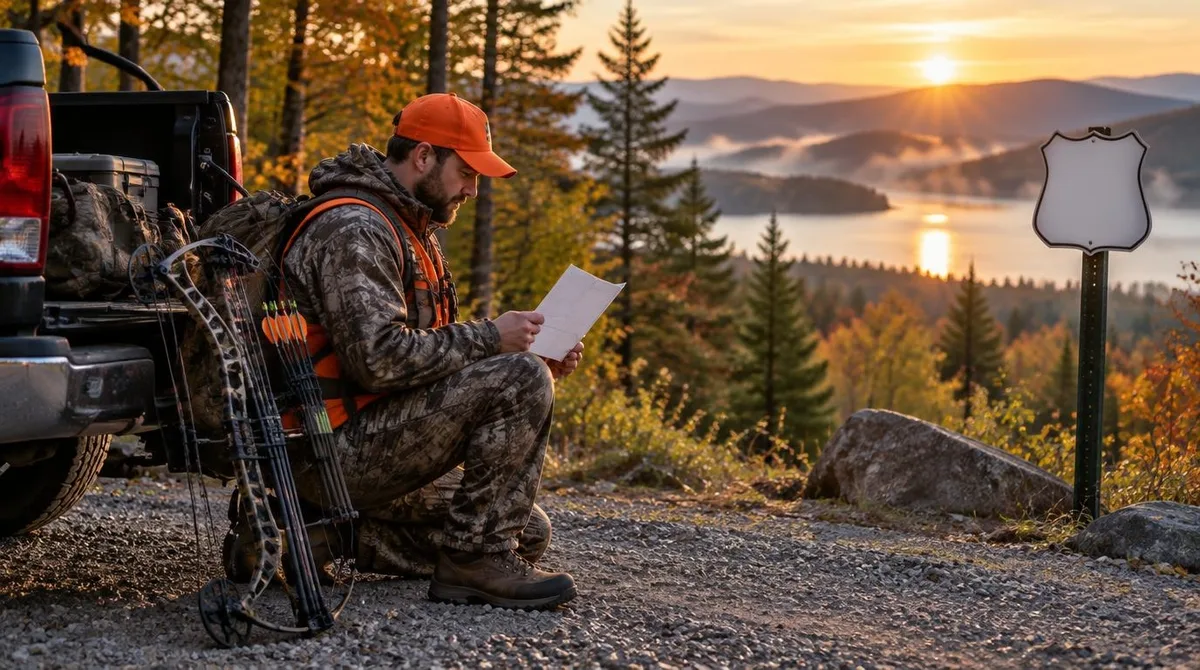
No, and this is the myth with the highest price of entry. In many states the base license is only the first purchase. In New York, for example, the state Department of Environmental Conservation notes that an annual hunting license is required before a hunter can buy the bowhunting privilege, the muzzleloading privilege, or a turkey permit, and that first-time hunters must pass hunter safety education before they can buy a license at all, per NYSDEC. A hunter who drives hours to a destination and then discovers the archery privilege was never purchased has lost the trip to paperwork, not to deer.
The same page carries a detail worth knowing for anyone hunting far from home: New York licenses and tags are valid in printed form on plain paper or electronically in the state's HuntFishNY mobile app, and either counts as proof in the field. Check the equivalent provision in the state you will hunt. Paper rules differ, and assuming they do not is part of the myth.
Do you have to be invisible to kill a deer?
No. Scent and sound control matter, but the belief that a deer will bolt from any human trace has pushed hunters into extremes the animals do not demand. Deer react to movement and to sound far more reliably than to a faint odor carried on a shifting breeze. A hunter who plays the wind, enters and exits quietly, and stays still in the stand does more than any product can. The myth costs deer because hunters skip marginal-but-good stands, hunt only when conditions feel perfect, and leave the woods early on slow mornings.
What the evidence supports is simpler: deer are cautious animals that pattern human activity. The Wildlife Society, the professional organization for wildlife scientists, defines modern hunting as the fair and legal pursuit of free-ranging wild animals and notes that regulated hunting is managed for sustainable populations and ethical harvest, per The Wildlife Society. Fair chase, in practice, means outsmarting an alert animal, not erasing every trace of yourself.
Is the biggest rack the right deer to wait for?
This one costs deer in a subtler way. A hunter who passes every legal animal while waiting for a trophy often ends the season with an unfilled tag, and in many jurisdictions an unfilled tag is simply an unfilled tag. The better frame is the one wildlife managers use: harvest within the regulations the agency sets, which exist to keep populations sustainable. The Wildlife Society's position statement describes regulated harvest as a tool for managing overabundant wildlife and using the harvestable surplus, per The Wildlife Society. Waiting for a specific animal is a personal choice; treating it as the only legitimate one is the myth.
Hunters traveling to new states face a related version. Assumptions carried from home about antler restrictions, season structure, or tag types do not transfer. Some states are heavily regulated on antler points; others are not. The current regulations digest, not memory, settles it.
Does moving always spook deer?
Staying put has value, but the belief that any movement ruins a hunt keeps hunters in dead stands for hours. Deer move through the day, and conditions change. When the wind shifts or the sign says the animals are using a different route, relocating mid-hunt is often the right call. The myth costs deer because hunters treat a poor setup as a commitment rather than a guess that can be revised.
The practical discipline is small: plan entry and exit routes before the hunt, move slowly, and accept that a careful relocation beats four more hours in a spot the deer are not using. Patience is a virtue; stubbornness in the wrong tree is not.
Do you need a lifetime of local knowledge to hunt new ground?
Local knowledge helps, but treating it as a prerequisite stops hunters from traveling at all. Public-land deer hunting rewards the same homework anywhere: study the map, identify access points, learn the season dates from the state agency, and scout on arrival. Hunters planning a trip far from home can start with our guide to planning a public-land deer hunt far from home, which walks through that sequence. The myth costs deer in aggregate: hunters who never leave familiar ground never learn how much good, huntable land exists a few hours away. For related coverage, see Public Land Deer Hunting Tips: How to Plan a Hunt Far From Home.
One administrative fact supports the traveler rather than blocking them. Nonresident licenses exist in every state that sells them, and the fees are published. In New York, per NYSDEC, a nonresident annual hunting license costs $100 for ages 16 and up, with a $30 bowhunting privilege added for archery seasons. Published numbers like these turn an intimidating trip into a budgeted one.
What this means for your next hunt
The pattern across all of these hunting myths that cost hunters deer every season is the same: an inherited assumption, never checked, quietly shaping decisions. The remedy costs nothing. Before the season, read the current regulations from the agency that manages your hunting ground, confirm which privileges and permits your chosen method requires, and check how that state wants licenses carried in the field. Before the hunt, question the tactical folklore too. Hunt the wind, not a scent-erasing ritual. Move when the setup is wrong. Take a legal deer when the season offers one.
Hunters who sharpen skills in the off-season, whether at the range with archery games that build shooting discipline or by studying the hunting-travel category for new ground, put themselves ahead of the hunter who simply repeats last year's assumptions. Deer are predictable in one respect only: they reward the hunter who adapts. We covered a connected angle in Archery Games for the Range That Sharpen Off-Season Shooting.
The field note
Rules differ by state and change by year, and nothing here substitutes for the current digest. Confirm license, privilege, and education requirements with the issuing agency for the state and season you will hunt, and carry proof of licensure in the form that state accepts. The deer you take legally and cleanly is the one that settles the argument with myth and tradition alike.