Hunting rain gear does three jobs at once. It keeps water out. It stays quiet on a draw or a shoulder mount. It vents the sweat that climbing produces. Most shells fail the first job at the seams, cuffs, and zippers long before the fabric wears out. A quiet shell layered in the right order covers a full season of wet weather.
Rain decides many seasons. A soft front in October soaks a treestand sit. A November gale tests every zipper in the pack. Hunters who treat rain shells as an afterthought spend those days wet, and wet means cold within the hour. Hunting rain gear chosen deliberately keeps the hunt alive instead of ending it.
Hunting rain gear: what leaks first
Water finds the weak points, not the middle of the fabric. Seam lines leak first, which is why quality pieces come fully seam-taped. Cuffs leak next, wicking water up sleeves during a drizzle. Zippers follow, unless a storm flap covers them. Hoods leak at the collar seam when the head turns.
Pants take on water at the knees and seat, where fabric presses into wet brush or ground. Boot tops and gussets fail after a season of mud. A hunter checking a shell before the season looks at those five points, not the hangtag claims. Re-taping a seam or swapping worn cuffs costs less than a new jacket. A five-minute inspection in the garage saves a soaked November morning. Taped seams that lift at the shoulders get pressed back down with a household iron and patience.
The layering order under a shell
The shell works only when the layers underneath are right. A moisture-moving base layer goes against skin, never cotton. Light insulation comes next, just enough to keep the chill off during a still sit. The rain shell goes over everything as the last layer. It gets sized to fit over insulation without binding the draw. The same order works in a blind, a treestand, or on a walk between covers. For related coverage, see Choosing an Archery Target by Bow Type and Draw Weight.
Ventilation keeps the system honest. Pit zips and front zippers dump heat on the walk in, then close for the sit. A shell worn sealed during a hard climb soaks the hunter from the inside. That sweat chills just like rain. The order matters as much as any waterproof rating: base, insulation, shell, with vents used early and often.
Quiet shells and fabric choices
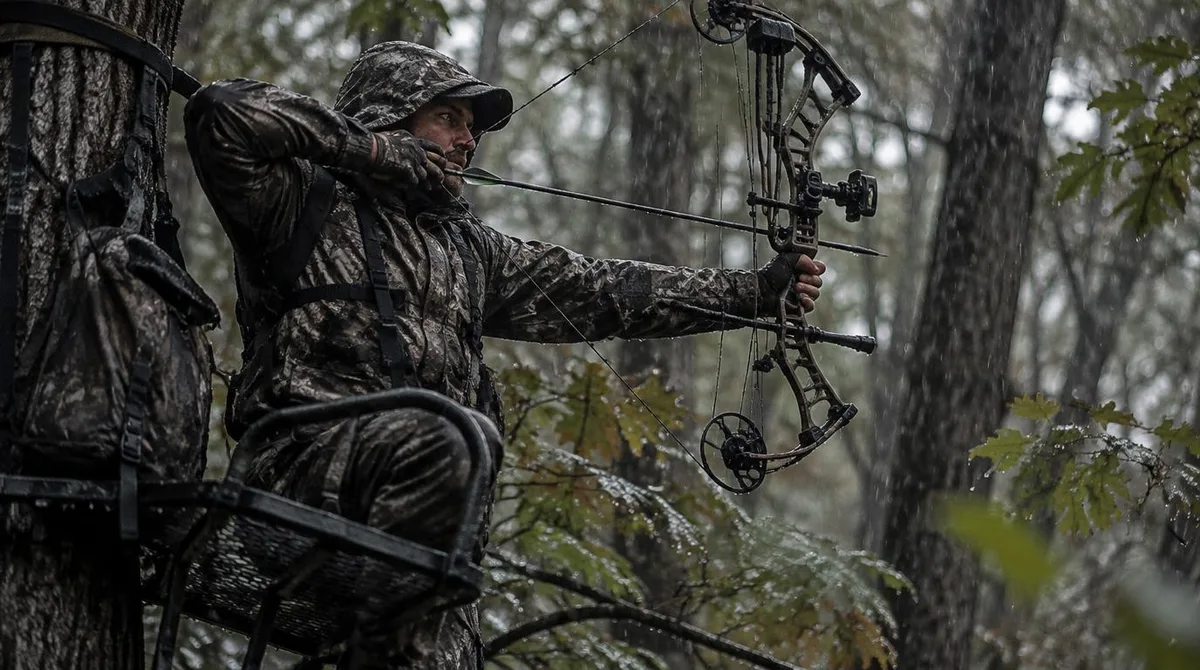
Fabric noise decides whether a rain jacket works for archery or only for rifle hunts. Stretch woven shells and soft face fabrics move quietly against brush and layers. Stiff coated fabrics shed water well but rustle at the worst moment. That trade suits a firearm hunter on a long walk. It fails an archer at fifteen yards.
Manufacturers publish their lineups in tiers. Kuiu sells its rain gear from an ultralight Chugach TR jacket built for pack-in hunts to the heavier Yukon TR suit known for durability. Its line runs seam-taped throughout, with women-specific fits offered. Sitka explains the same trade on its stories page. GORE-TEX is 100 percent waterproof, while WINDSTOPPER trades full waterproofing for better breathability. Those two tiers, quiet soft shell versus fully taped hard shell, cover most hunting rain gear decisions. Kuiu also lists a four-layer HD Flex storm shell as its most durable waterproof jacket, aimed at waterfowl work. This connects to our earlier piece, Hunting Gear for a Full Season: The Layering System That Holds Up.
Safety when the rain turns serious
Rain and cold water raise stakes beyond comfort. Minnesota's Department of Natural Resources reports that over 30 percent of boating fatalities in the state happen in cold water. It urges wearing, not carrying, a life jacket. The 1-10-1 principle gives one minute to control breathing, ten minutes of meaningful movement, and one hour of useful consciousness.
Hunters in boats or waders take that math seriously. A wader belt slows water entering chest waders after a fall. Keeping clothes on in the water holds heat. Rain gear that keeps a hunter dry also slows heat loss on shore. That is the quiet safety argument for good shells, and it rarely gets made. A float coat adds warmth and buoyancy in one piece for boat hunters.
Conclusion: dry beats damp
Hunting rain gear earns its place at the seams and cuffs before anywhere else. Layer a quiet shell over a wicking base and light insulation. Vent it on the move. Check the five leak points each fall. The hunter who stays dry stays out, and staying out is how seasons end well.