Deer hunting gear makes the most sense when it is sorted by phase instead of piled together. Scouting demands light, quiet clothing and mapping tools. Stand time demands insulation and patience gear. Recovery demands lights, markers, and game-handling tools. One pack never serves all three phases well.
The seasons set the rhythm. Wisconsin publishes an archery and crossbow deer season from mid-September into early January. The firearm season lands in late November, and muzzleloader and antlerless-only stretches follow in December. Each phase of that long calendar pulls different deer hunting gear out of the closet. A phase-based checklist keeps the load honest. A muzzleloader stretch and a holiday hunt stretch the calendar further in some zones. This connects to our earlier piece, Hunting Gear for a Full Season: The Layering System That Holds Up.
Scouting gear for summer and early fall
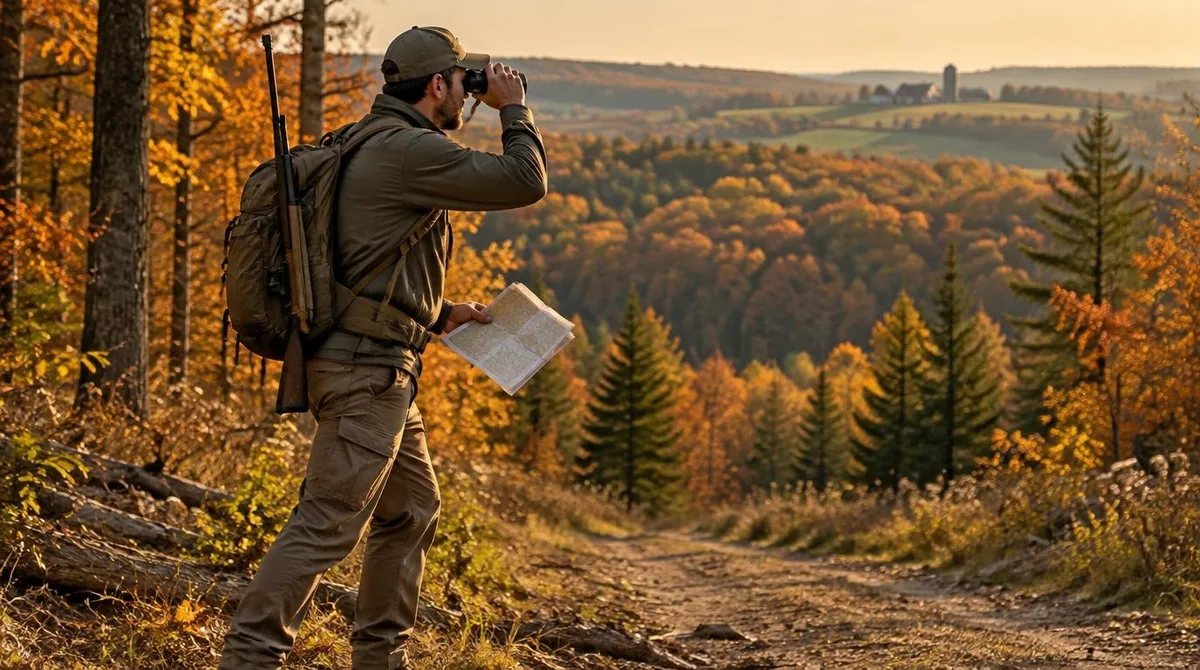
Scouting is a walking job, so the gear stays light. Breathable boots, tick protection, and a binocular do most of the work. Boots for scouting get chosen for ankles and grip, not warmth. Old logging roads and creek crossings punish cheap footwear. Insect repellent belongs in the summer kit too.
Trail cameras come along on the first rounds, paired with fresh batteries and straps. Mapping tools earn their place before the season opens. Printed maps or a mapping app mark rubs, scrapes, and funnels. A small notebook records stand sites and wind directions. That record matters more in November than any single gadget. Summer sits over winter wheat confirm what the cameras show.
Stand phase: quiet deer hunting gear that fights cold
The stand phase rewards silence and stillness. Quiet outer layers matter most here, because a deer hears a stiff sleeve at thirty yards. Insulated boots with stiff soles fight cold. They also let a hunter stand on pegs without pain. A safety harness outranks every comfort item, and it goes on before boots leave the ground.
Deer hunting gear for long sits includes the comfort pieces most hunters skip. A seat cushion beats a bare platform on an all-day watch. A wide-mouth thermos keeps soup hot through midday. Hand warmers tucked into pockets extend a sit by an hour. Rangefinder work around the stand, done before first light, marks lanes at set distances. The shot moment then needs no measuring.
Recovery phase: markers, lights, and game care
Recovery starts the moment the shot lands, not when the deer is found. Marking the last-seen point with tape keeps a blood trail readable. A good blood-tracking light makes red on brown leaves visible after dark.
Once the deer is down, the kit changes. A sharp knife, nitrile gloves, and a small bone saw handle field care. A backup blade rides in the truck, because one knife dulls mid-job. A drag harness or sled saves a back. Wisconsin requires harvest registration by 5 p.m. the day after the carcass is recovered. The phone or registration number stays in a dry pocket. The agency also offers free chronic wasting disease testing, which many hunters use at drop-off sites. Latex or nitrile gloves keep hands clean, and a small sharpener revives a dull edge at the truck.
The paper trail before the pack
No checklist outranks the license. Wisconsin requires a gun deer license to harvest deer with a firearm or airgun, an archery license for bow and arrow, or a crossbow license. The agency now publishes its regulations in an online version that mirrors the print format, and buyers should check it each fall. Blaze orange or pink must cover at least half the clothing above the waist during firearm seasons. Bonus antlerless permits cost extra in Wisconsin and get bought before the season, not after a deer is down.
Those rules shape the gear list directly. An orange vest hangs next to the stand harness where it cannot be forgotten. Licenses and tags ride in a wallet, not in a truck console. The hunter who treats paperwork as part of the kit never watches a season end at a check station.
Conclusion: pack for the phase at hand
Deer hunting gear works when each phase gets its own short list. Light and quiet for scouting. Warm and silent for the stand. Sharp and bright for recovery. Keep the licenses current and the registration deadline marked. Seasons run long, and the hunter packed for the right phase spends less time fumbling and more time hunting. One bag, reloaded by phase, beats three half-packed bags in a truck bed.