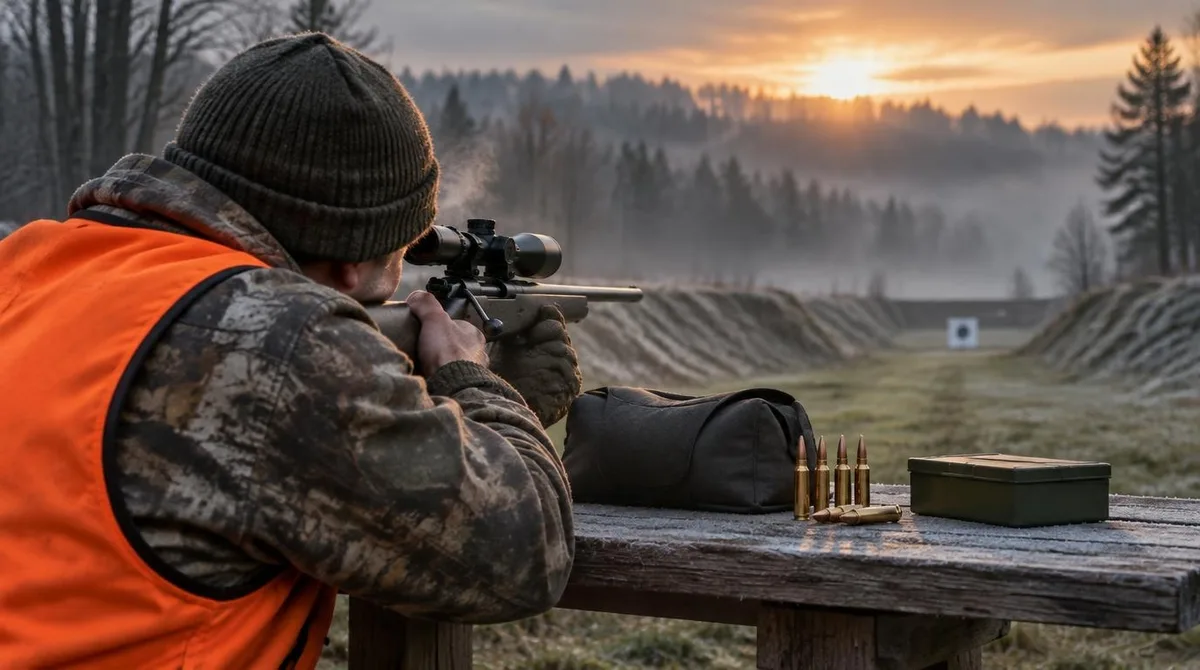
The best caliber rifle for deer hunting is the one you shoot well, carry comfortably and can feed reliably in the state you hunt. Plenty of cartridges fill that role. What separates a good choice from a bad one is rarely raw ballistics. It is recoil you can manage, a rifle that fits, and a round that is legal where you hunt.
Start from a decision point, not a catalog. Ask three questions. How far will your shots realistically be? How much recoil can you shoot accurately, session after session? And what does your state's hunting regulation say is legal for deer? Answer those and the cartridge list gets short fast.
What Makes a Cartridge Right for Deer?
Deer are medium game. They do not require heavy, belted magnums or specialized loads. What they require is a bullet that arrives with enough energy to penetrate the chest cavity, expand dependably, and exit or break far enough through to end things quickly. Most standard centerfire cartridges in the mid-weight range do exactly that when the shooter does their part.
Shot placement matters more than cartridge choice. A well-placed bullet from a modest round outperforms a poorly placed bullet from a powerful one every season. That is why the honest answer to the caliber question starts with the shooter, not the box of ammunition.
Range matters too. A hunter shooting inside 150 yards in thick timber needs less cartridge than one hunting open crop fields where 300-yard shots are possible. Longer range demands a flatter trajectory and more retained energy, and it demands a shooter who has verified their zero and their holdovers at distance. Be honest about which hunter you are.
The Classic Deer Cartridges
A handful of cartridges have earned their reputation over generations of whitetail and mule deer seasons, and they remain the defaults for good reason.
- .30-06 Springfield. The old standard. It handles everything from brush-country shots to open-ridge shooting, and ammunition is stocked in every small-town hardware store that sells any at all.
- .270 Winchester. Flat-shooting and mild in recoil. It has taken deer across North America since the mid-twentieth century and remains a favorite for shooters who flinch with heavier rounds.
- .308 Winchester. A short-action round with a wide bullet selection, modest recoil and excellent accuracy potential. It shares its ballistics family with military cartridges, which keeps factory load choices deep.
- .243 Winchester. Light recoil makes it a common pick for smaller-framed and recoil-sensitive shooters. Bullet selection and shot placement matter more here than with the heavier sixes and thirties.
- 6.5 Creedmoor. The modern arrival. Low recoil, high ballistic efficiency and match-grade factory accuracy made it popular quickly, and deer loads are now widely available.
Any of these will kill deer cleanly inside sensible ranges. The differences between them, on a deer, are smaller than the differences between shooters.
Recoil, Fit and the Shots You Actually Take
Recoil is the hidden variable. A cartridge that kicks hard enough to make you flinch in practice will cost you deer in November. Shooters who practice regularly with a given rifle build tolerance; shooters who sight in once and stop practicing do not. Choose the mildest cartridge that meets your range and energy needs, then practice with it until shooting it is boring.
Fit comes next. Length of pull, comb height and grip angle determine whether the sights return naturally after recoil. A rifle that fits lets you shoot better with any cartridge. A rifle that fights you does the opposite.
History backs this up. The rifles hunters carried decades ago were built around the same principle: a chambering the owner could shoot well, in a rifle built to last. According to Outdoor Life, the post-war FN Mauser sporting rifles imported from Belgium in the 1950s and 1960s were purpose-built hunting guns, not sporterized military actions, and the example reviewed there was chambered in .270 Win and used to take a lot of deer and elk. Those rifles were sold under names like the JC Higgins Model 50 at Sears, Roebuck, and imported by companies including Weatherby, Harrington & Richardson, and Colt. Hunters of that era settled on the same mid-weight cartridges many still choose today, and the guns are still running decades later.
Regulations: Check the Law Before You Buy
This is where many buyers skip a step and pay for it. State hunting regulations govern what you may legally use for deer, and the rules vary widely.
- Some states restrict straight-wall cartridges or shotguns in densely populated zones.
- Some set minimum caliber or case-length requirements for big game.
- Some allow rifles everywhere; others limit them to specific zones or seasons.
Read the current regulation summary published by your state wildlife agency before you buy, and check it every season, because rules change. Our analysis: the cartridge ranked best on paper is worthless if a game warden can write you a ticket for carrying it. A deeper treatment of how ballistics and the law interact is in our guide, Best Deer Hunting Caliber Picks Ranked by Ballistics and Law.
Matching the Cartridge to the Hunt
Think in hunt profiles rather than cartridge names.
- Thick brush and hardwoods. Shots are short and windows are brief. A mid-weight cartridge with a quick-handling rifle serves better than a long-range magnum you will never stretch out.
- Open fields and ridge country. Longer shots reward flatter trajectories. Here the .270, 6.5 Creedmoor and similar rounds earn their reputation, provided you practice at distance.
- Shared or youth hunts. Recoil tolerance drives the choice. The .243 and 6.5 Creedmoor exist for exactly this reason.
- One rifle for deer and elk. The .30-06 and .308 carry a wider range of bullet weights, which is why they remain the do-everything picks.
Whichever profile fits, the rifle itself matters as much as the round. Action type, weight and how a cartridge pairs with both are covered in Best Rifle for Deer Hunting: Action, Weight and Cartridge Fit, and the broader gear picture lives in our hunting gear coverage. For related coverage, see Best Rifle for Deer Hunting: Action, Weight and Cartridge Fit.
What This Means Before You Buy
Practical steps, in order. First, read your state's deer regulations and write down what is legal. Second, decide your realistic maximum shot distance based on the ground you hunt, not the ground you wish you hunted. Third, pick the mildest legal cartridge that meets that distance and shoot it before committing: most ranges rent rifles, and a box of ammo is cheaper than the wrong rifle. Fourth, buy quality optics and practice more than you think you need to.
What the evidence establishes is simple. Mid-weight classic cartridges, shot well from a rifle that fits, have filled deer tags for three-quarters of a century and will for the next one. What remains unknown is only one thing about your situation: which of the proven rounds your shoulder, your budget and your state's rulebook agree on. That answer is yours to work out.
Field note: Sight in with the same load you will hunt with. Different bullet weights and brands print to different points of impact, and a zero confirmed with practice ammo is not a zero for the hunting box. Confirm with the real thing before opening day.