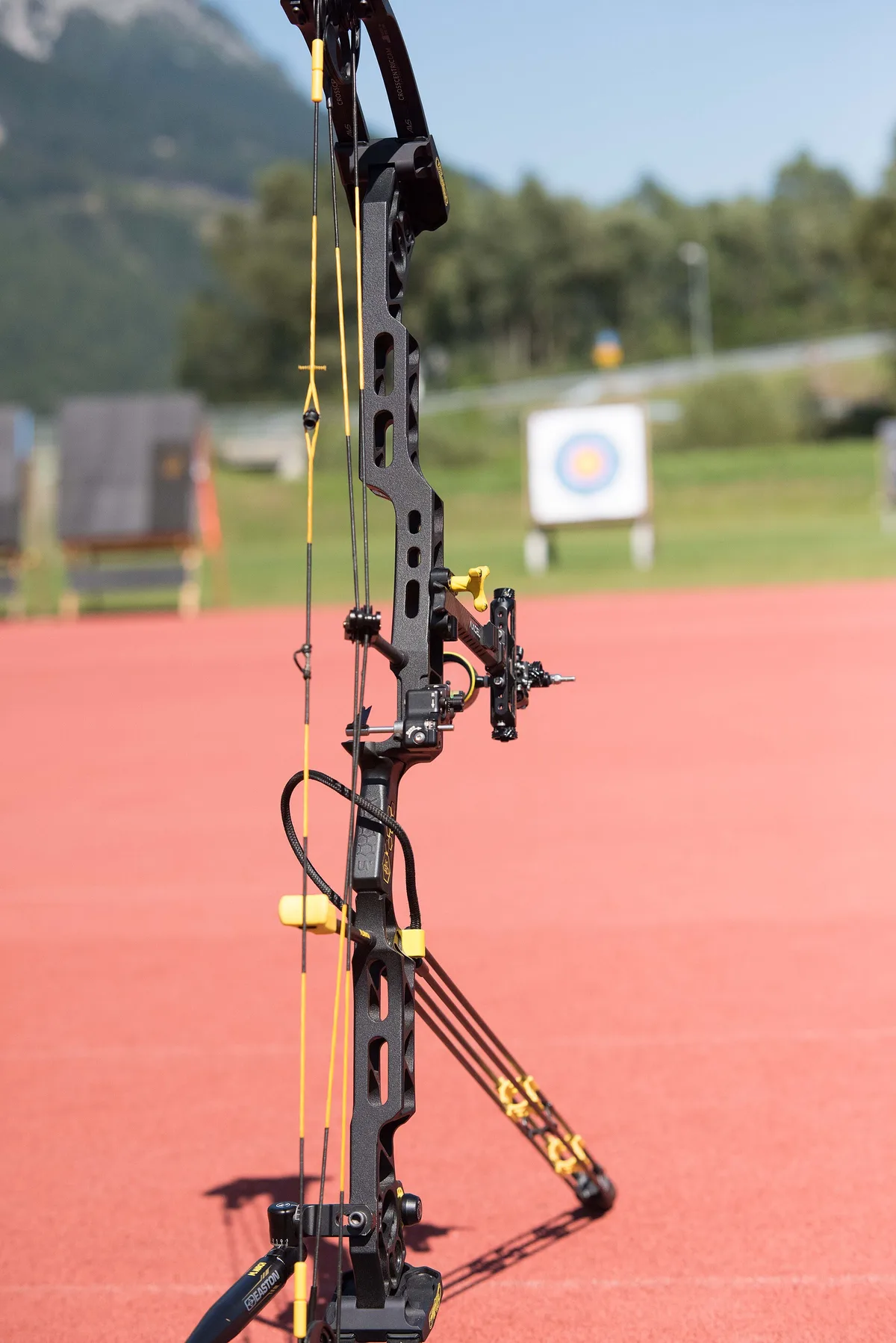
Mathews Archery builds compound hunting bows in Wisconsin, and the current lineup centers on the 2026 ARC, a speed-oriented hunting bow the company sells in two lengths. Per the Mathews product page, the 30-inch ARC runs up to 348 feet per second IBO with a 6-inch brace height and lists at $1,459, while the 34-inch version trades a little speed for a longer, steadier aiming platform at $1,569. That is the short answer for anyone shopping Mathews archery gear this season.
Who is this for? A bowhunter who wants a premium, feature-heavy rig and is willing to pay for it. As Lancaster Archery Supply notes in its Mathews collection listing, the company builds bows for both bowhunters and target archers, and its recent technologies include SwitchWeight, Integrate, Bridge-Lock, Resistance Phase Damping, and the Stay Afield System. Those names show up throughout the current catalog, and they matter when you compare one bow to another.
This guide walks through what those technologies do, what the ARC's numbers mean in a treestand or on a sheep mountain, and how to match a model to your style of hunting. If you are building out the rest of your kit alongside a new bow, our Deer Hunting Gear by Phase: Scouting, the Stand, and Recovery checklist covers the season-long pieces beyond the bow itself. Readers following this should also see Deer Hunting Gear by Phase: Scouting, the Stand, and Recovery.
Who is Mathews Archery, and what does the company build?
Mathews is a Wisconsin-based manufacturer that primarily makes compound bows. That is how Lancaster Archery Supply describes the company in its collection listing, and it tracks with what you find on the dealer shelf: hunting compounds first, target bows alongside them. The company is not a budget brand. Its bows sit at the upper end of the price range, and the feature list explains why.
The named technologies are the honest way to describe what the money buys. SwitchWeight refers to the cam system that lets an archer change draw weight without a bow press. Bridge-Lock is the riser-mounted accessory attachment approach the company uses for stabilizers. Resistance Phase Damping is Mathews' vibration-control work, and the Stay Afield System, or S.A.S., is the company's name for its in-the-field service support. All of these come from the Lancaster listing and the Mathews site, not from dealer folklore.
One practical note: because Mathews sells through a dealer network rather than direct, most buyers will shoot a bow at a shop before they own it. That matters more than any spec sheet. Draw length, draw feel, and grip shape are personal, and two archers can shoot the same model and reach opposite verdicts.
What are the 2026 ARC specs, and what do they mean in the field?
The ARC is Mathews' 2026 flagship hunting bow, and the specs come straight from the manufacturer's page. The 30-inch model: 6-inch brace height, IBO rating up to 348 feet per second, 30-inch axle-to-axle, draw weights from 55 to 80 pounds, draw lengths from 25 to 30.5 inches, 80 or 85 percent let-off, and a physical weight of 3.99 pounds. The cam is the SWX-2, and the MSRP is $1,459.
The 34-inch model shares the cam and the draw-weight range but stretches to a 6.5-inch brace height, up to 343 feet per second, draw lengths from 26.5 to 32 inches, and 4.3 pounds on the scale. MSRP is $1,569. Mathews positions both as speed bows built to hold velocity across real hunting setups, with a redesigned limb cup and limb geometry and a reinforced riser.
What this means for a bowhunter is straightforward. The shorter bow is easier to maneuver in a blind or a thick treestand setup. The longer bow aims steadier, which matters at longer shot distances and on backcountry trips where a second chance never comes. The 3.99- and 4.3-pound bare-bow weights are light for their class, which helps on a pack-in hunt where every ounce gets counted.
Which ARC features actually change how the bow shoots?
Four items on the Mathews page are worth an archer's attention, and one of them is genuinely unusual.
- The SWX-2 cam with Perimeter Weight Technology. Mathews says it reduces felt recoil while retaining speed, which translates to flatter trajectories and more forgiveness on a hurried shot.
- The redesigned limb assembly. The company describes a parallel limb path intended to improve feel and cut post-shot vibration, with a lighter limb cup adding stability.
- SWX-Z mod options. These alternate mods offer a more generous draw curve for a smoother draw, with what Mathews calls a modest tradeoff in peak speed. If draw comfort matters more than the last few feet per second, this is the option to ask your dealer about.
- Limb Shift Technology. This patented tuning system lets an archer micro-adjust limb channel width without a bow press. For anyone who tunes a bow at home or on a trip, that is a real convenience.
The ARC also carries mounting provisions for the company's Bridge-Lock 7-degree angled stabilizers, an integrated V-bar port, and what Mathews calls an integrated Silent Connect anchor. Accessory integration does not change arrow speed, but it cleans up a rig and quiets it, and a quiet bow is the whole point of a hunting setup.
The launch push behind the bow is easy to find. Mathews' own promotional video for the 2026 ARC carries the same "Set the Pace" framing that runs across the product page, and the company quotes target archer Levi Morgan calling the ARC "the best aiming hunting bow I have ever shot." Treat those as the maker's and its sponsored shooters' claims about their own product, not independent testing. The specs you can verify; the shooting impressions you should verify yourself at a dealer.
Which model fits which bowhunter?
Match the bow to the hunting you actually do, not to the bigger number on the speed sticker.
- Treestand and blind hunters. The 30-inch ARC is the natural fit. A 30-inch axle-to-axle bow is easier to manage in cramped quarters, and the 6-inch brace height keeps the setup compact. Draw lengths from 25 to 30.5 inches cover most adult archers.
- Western and spot-and-stalk hunters. The 34-inch ARC earns its extra cost here. The longer axle-to-axle and 6.5-inch brace height make a steadier aiming platform, and the longer draw-length range, out to 32 inches, suits archers with longer draws who often shoot longer distances. The company's own page leans on a backcountry framing, quoting a shooter on how the bow handled brush, scree, and hailstorms in sheep country.
- Speed-first archers. The 30-inch model's 348 feet per second IBO rating is the headline number. Remember that IBO ratings assume light arrows and specific conditions; your hunting arrow will be slower. Plan trajectories around your own chronograph readings, not the sticker.
- Budget-conscious buyers. Neither ARC is cheap. If $1,459 is out of range, the honest advice is to shop the previous-year models at dealers rather than stretch into a flagship. A well-tuned two-year-old bow kills deer as dead as this year's.
Whatever you choose, the fundamentals do not change. Match the arrow spine to your draw weight and setup, which our guide to choosing an archery target by bow type and draw weight touches on from the practice side, and confirm your draw length at a shop before you order. A press-free tuning system helps, but it does not replace a properly fitted bow.
What should you check before you buy?
Three checks will save most buyers from a bad purchase.
- Draw length fit. The ARC's ranges are generous, but a half inch of draw length error changes everything from anchor feel to accuracy. Get measured.
- Draw weight versus your hunting. The 55-to-80-pound range is wide for a reason. Pick the weight you can hold steady at full draw in cold weather, not the one that sounds tough at the counter.
- Let-off choice. The 80 or 85 percent option changes how hard the bow holds at full draw. Higher let-off holds easier; lower let-off can aim crisper. Shoot both if your dealer has them set up.
Also ask the dealer about the Stay Afield System. Mathews' S.A.S. program is the company's field-service support, and knowing what it covers before a distant trip is worth ten minutes of conversation. And when the bow is home and sighted in, keep it honest with regular practice on a target that matches your setup.
The field note: who should buy, who should not
Here is the verdict in the plainest terms. Buy the 2026 ARC if you want a top-tier speed bow with modern damping, press-free tuning, and deep accessory integration, and you have the budget for a $1,459 to $1,569 rig per the manufacturer's pricing. Choose the 30-inch model for treestand and blind work, the 34-inch for western hunts and longer shots. Do not buy it if you are a first bow owner on a budget; a mid-priced bow fitted well will serve you better than a flagship fitted poorly. And do not buy any Mathews sight unseen. Shoot it, side by side with its competitors if the shop allows, and let your own draw cycle make the decision the marketing cannot.
One caution that outlasts every model year: the specs above are the 2026 figures from the manufacturer's page. Bow lines refresh annually, and draw-weight ranges, speed ratings, and prices move. Confirm the current numbers with the company's page or your dealer before you put money down.